

Water on the Land is a guide that Rivers West prepared in 2012 with the landscape architects Scatliff+Miller+Murray and funding from the Province of Manitoba. It shows school communities and owners of parks and mid-size commercial properties how to manage rain and snowmelt on their own land.
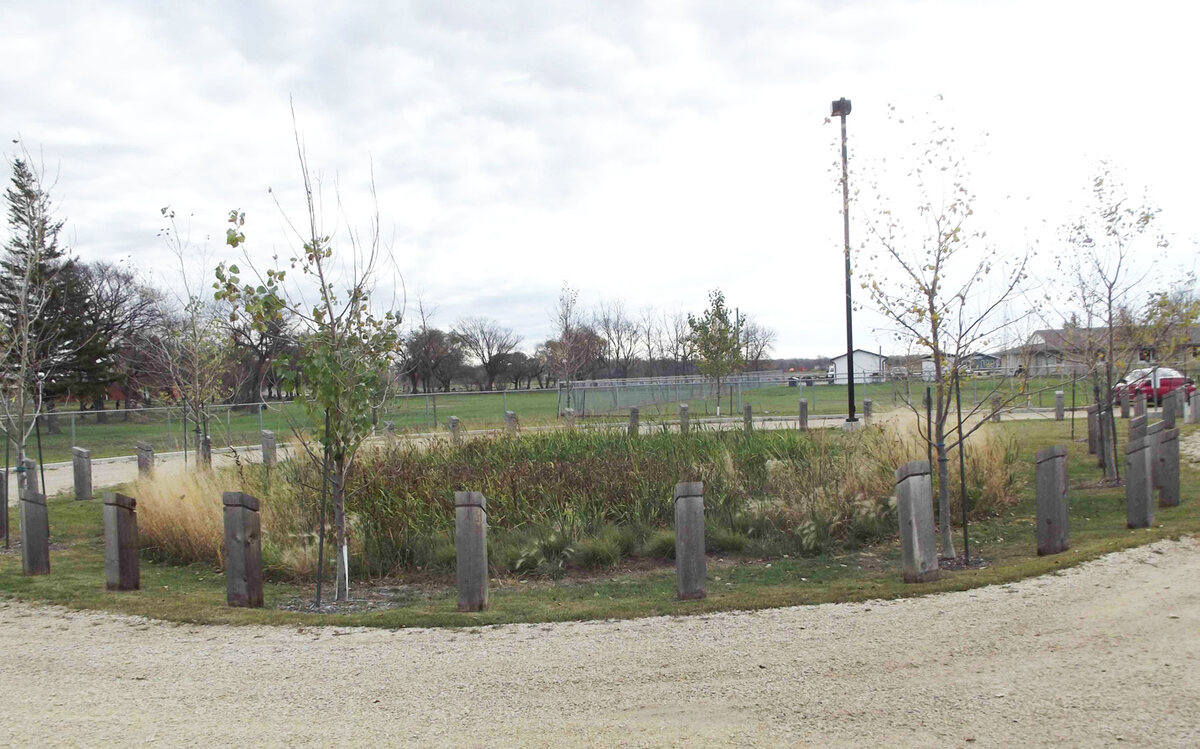
Why stormwater matters
Stormwater is rain or melted snow that does not soak into the ground. As it runs off, it picks up soil, fertilizer, oil and road salt, and it reaches rivers and Lake Winnipeg without passing through a treatment plant. Excess nutrients in this runoff have been linked to the algal blooms in Lake Winnipeg.
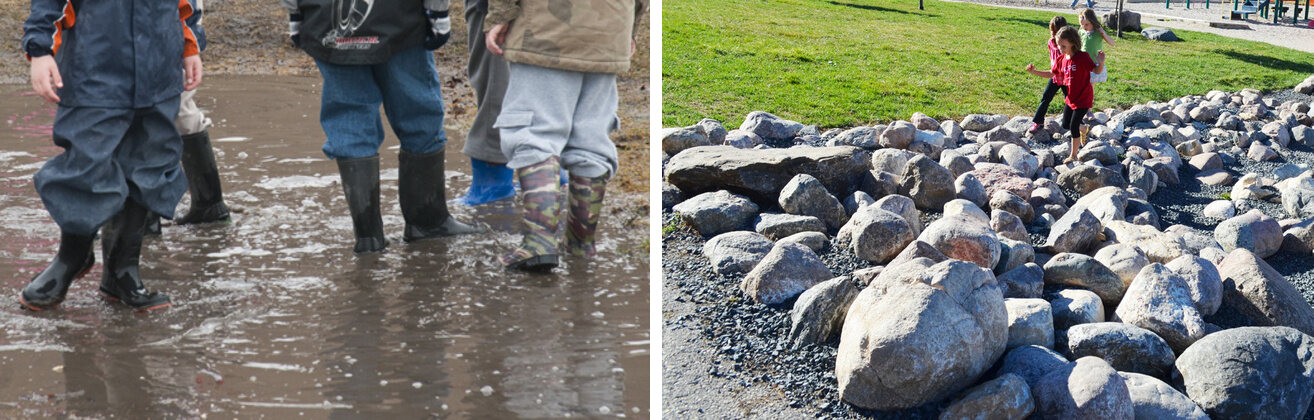
Five simple techniques
- Shape the land so runoff flows to swales or planted areas.
- Keep impervious surfaces such as asphalt to a minimum.
- Collect roof water in a covered rain barrel for watering plants.
- Protect catch basins from sediment and pollutants.
- Plant deep-rooted native species: Big Bluestem roots can grow up to 5 metres long.
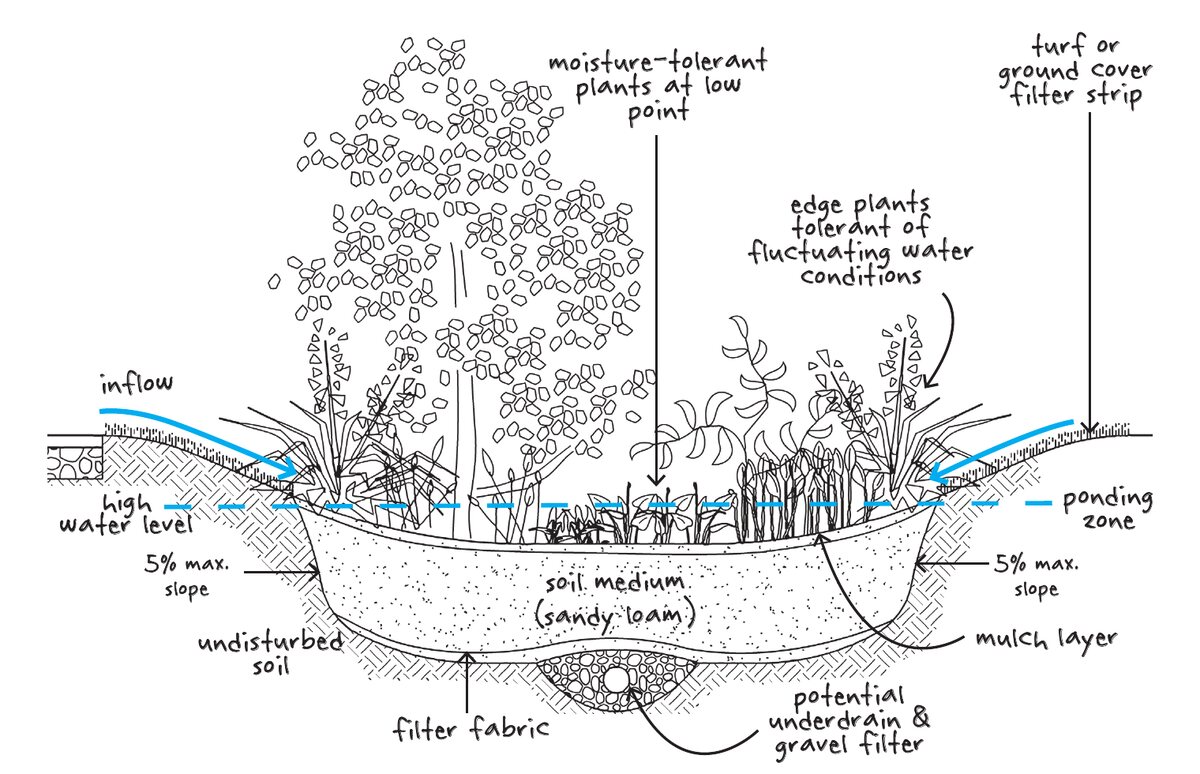
Rain gardens and bio-swales
Bio-retention systems are shallow planted areas that hold runoff and filter it through mulch and sandy soil. In Manitoba’s compact clay soils an underdrain is often needed, and water should not stand in a rain garden for more than two days.
On school grounds, a rain garden also becomes an outdoor classroom where students can watch how plants and soil clean water.